
Why We Judge a Business by Its Website
(Even Before We Know the Brand)
Your website speaks long before your business does.
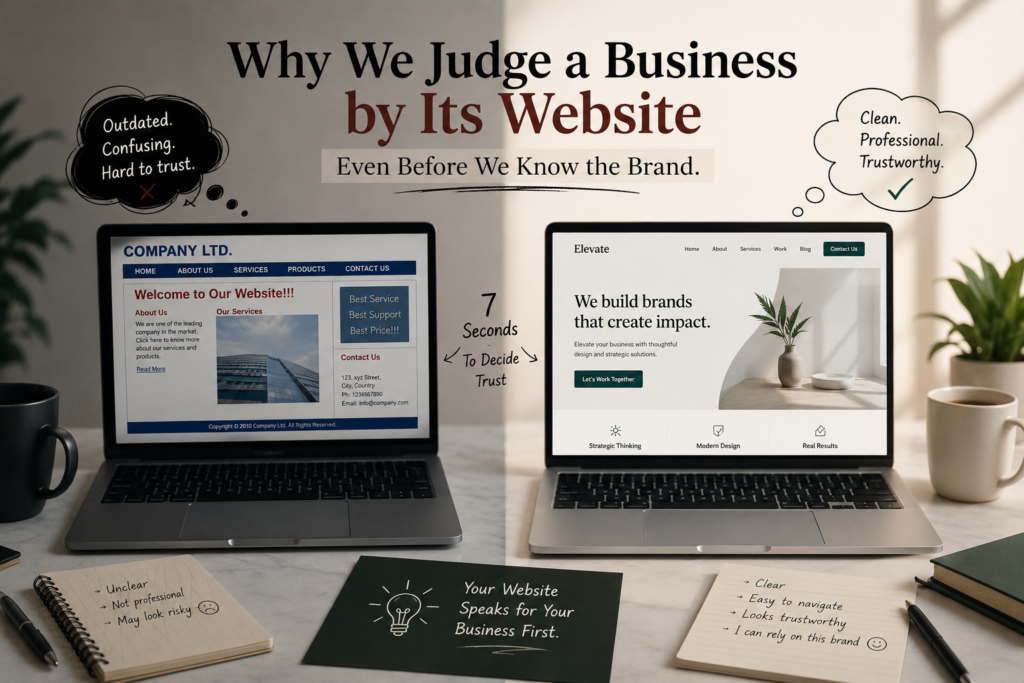
A few weeks ago, I was searching online for a service. Like most people, As I browsed through the search results, I opened a few websites that all claimed to offer the service I was looking for. The first website immediately caught my attention. It looked clean, modern, and easy to navigate. The colours felt balanced, the layout was organised, and everything seemed thoughtfully designed. The second website offered almost the same service, but the experience was completely different. The layout felt cluttered, the fonts didn’t complement each other, the images looked outdated, and even finding basic information took more effort than it should have.
Without thinking twice, I found myself trusting the first business. The interesting part was that I hadn’t read much about either company. I hadn’t compared their prices or checked their reviews. My decision was based almost entirely on how their websites made me feel. That moment made me realise something important: long before customers know your business, they experience your website. And often, that’s enough for them to decide whether they trust you.
Your Website Creates the First Impression
We’ve all heard the saying, “First impressions matter.” In today’s digital world, your website is often that first impression. Before someone talks to you, visits your office, or purchases your product, they usually visit your website. Within just a few seconds, they’ve already started forming opinions about your business. They silently ask themselves questions like: Does this business look professional? Can I trust it? Is it credible? Should I continue exploring or leave?
What’s fascinating is that these decisions happen almost instantly. Visitors don’t consciously analyse every colour, font, or image on your website. Instead, their brains quickly combine all those elements into one overall impression. Whether that impression is positive or negative can determine if they stay or leave.
Website Design Is Part of Your Brand
Many people believe branding begins with a logo, but it actually begins with perception. Your website communicates your brand long before visitors read a single sentence about your business. Every design decision sends a message. A clean layout suggests professionalism, consistent colours create familiarity, thoughtful typography improves readability, and high-quality images reflect attention to detail. Even the spacing between sections affects how comfortable someone feels while browsing.
Individually, these elements might seem insignificant, but together they shape how people perceive your brand. Your website isn’t simply displaying information; it’s introducing your business and expressing its personality.
Good Design Builds Trust
One of the biggest misconceptions about website design is that it’s only about making a website look attractive. In reality, good design has a much greater purpose, it builds trust. Think about the last time you visited a website that was slow, confusing, or cluttered. Chances are you left within seconds, not because the business offered poor products or services, but because the experience itself felt unreliable.
A well-designed website does the opposite. It guides visitors naturally, helps them find information quickly, and makes every interaction feel effortless. When people don’t have to struggle to navigate a website, they begin to trust the business behind it. In many ways, visitors aren’t just judging what they see, they’re judging how the experience makes them feel.
The Small Details Make a Big Difference
Most visitors won’t consciously notice every design choice, but they’ll certainly notice the overall experience. Colours influence emotions, typography affects readability, white space makes content easier to absorb, and consistent layouts create a sense of familiarity. High-quality visuals add credibility, while clear navigation reduces frustration.
None of these elements seem particularly powerful on their own, but together they determine whether someone stays on your website or leaves within seconds. Great website design isn’t about impressing visitors with flashy effects; it’s about making them feel comfortable, confident, and understood.
What Businesses Often Overlook
Many businesses invest heavily in advertising, social media, and SEO to attract visitors, but they often overlook what happens once those visitors actually arrive on their website. Driving traffic to a poorly designed website is like inviting customers into a store that’s disorganised and difficult to navigate. No matter how effective your marketing is, a confusing website can quickly destroy the trust you’ve worked so hard to earn.
Your website isn’t just another marketing asset. It’s often your hardest-working salesperson, representing your business every hour of every day. That’s why investing in a good user experience is just as important as investing in marketing itself.
What Building My Own Portfolio Taught Me
While building my own portfolio using WordPress, Astra, and Elementor, I realised that every design decision carries meaning. Initially, my focus was simply on making the website look visually appealing. But as I learned more about branding, user experience, and consumer behaviour, my mindset changed.
Instead of asking, “Does this look good?” I started asking different questions. Will visitors immediately understand who I am? Will they know what I do? Can they navigate the website without confusion? Do the colours reflect the personality I want my personal brand to communicate?
Those questions completely changed my approach. I realised that designing a website isn’t about arranging beautiful sections on a page. It’s about creating an experience that feels intuitive, trustworthy, and memorable.
Conclusion
That simple comparison between two websites reminded me that people don’t wait until they know your business before forming an opinion. They begin judging it the moment your homepage loads. A website doesn’t just showcase what a business does, it represents who the business is.
Every colour, font, image, and interaction quietly answers one important question in a visitor’s mind: “Can I trust this business?”
As someone learning digital marketing and website design, this has become one of my biggest takeaways. A beautiful website may capture someone’s attention, but a thoughtfully designed website earns something much more valuable, their trust.
Think about the last website you visited. Before you knew anything about the business, what impression did it leave on you?
Frequently Asked Questions About Website Design and Brand Trust
1. Can website design affect a visitor’s decision to choose a business?
Absolutely. A website is often one of the first places people visit before engaging with a business. Its layout, presentation, and ease of use can influence whether visitors decide to explore further, make an enquiry, or look for another option.
2. What does a website communicate about a brand?
A website reflects how a business presents itself to the world. Its visual style, content, structure, and overall presentation can communicate whether a brand is creative, professional, reliable, or customer-focused.
3. Why do visitors leave websites without taking action?
Visitors may leave when they struggle to find relevant information, encounter confusing layouts, experience slow page loading, or cannot understand what the business offers. A website should make the next step clear rather than create unnecessary obstacles.
4. How can website design make a business look more professional?
A thoughtful combination of typography, colour choices, spacing, images, and consistent page layouts can give a website a more polished appearance. Presenting information clearly and maintaining consistency across pages also helps create a stronger impression.
5. What is the connection between website design and customer experience?
Website design determines how information and features are presented, while customer experience reflects how visitors feel when interacting with them. A well-planned design makes browsing more comfortable, reduces confusion, and helps visitors accomplish what they came to do.
6. How often should a business update its website design?
There is no fixed timeline for redesigning a website. Businesses should review their websites regularly and make improvements when their branding changes, technology evolves, user expectations shift, or existing design elements no longer serve their purpose.
This post offers some excellent points and practical insights. I always appreciate content that encourages learning and sharing knowledge. Great job!
— Muhammad Fayiz | Freelance Digital Marketer
Thank you, Muhammad! I appreciate your feedback and support.