
When an Advertisement Becomes More Than Just an Advertisement
Sometimes the most successful ad campaign isn’t the one you watch—it’s the one you keep talking about.
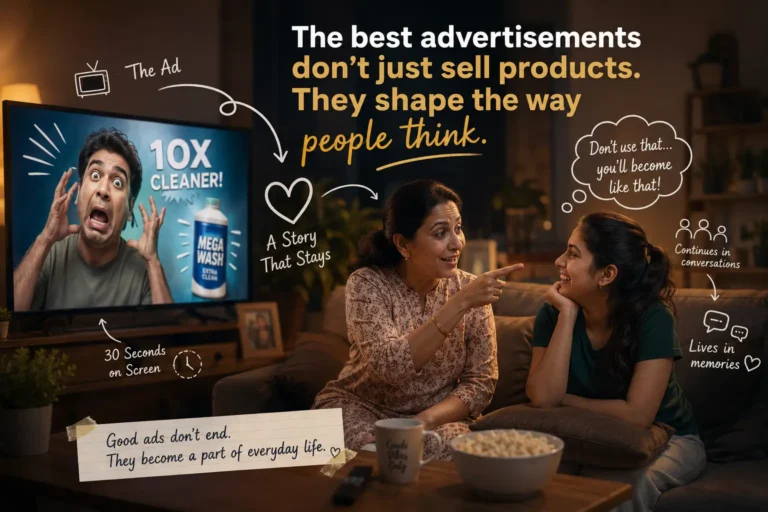
“The best advertisements don’t just sell products. They shape the way people think.”
I didn’t learn this from a marketing textbook or a digital marketing course. I learned it while watching television with my mother. Every time an advertisement showed someone acting dramatically or behaving in an exaggerated way after using a product, she would immediately look at me and say, “Don’t use that… you’ll become like that!” Even after hearing it so many times, I still couldn’t help but laugh.
But after hearing it over and over again, I started paying less attention to the product and more attention to her reaction. That’s when I realised something fascinating. She wasn’t reacting to the product; she was reacting to the story the advertisement had created.
And that’s when I understood something every marketer hopes to achieve. The commercial may have ended, but the conversation it started continued. It continued in our living room. It became part of our conversation and influenced how she remembered the brand. That’s when I realised that the real power of advertising isn’t in the thirty seconds people watch—it’s in the conversations that happen afterwards.
Why Great Advertisements Stay in Our Minds
Most advertisements compete for attention, but great advertisements compete for memory. Anyone can create an eye-catching commercial, but creating something people remember months—or even years—later is much harder.
The strongest campaigns don’t simply tell people what a product does. They make people feel something. Whether it’s laughter, surprise, nostalgia, curiosity, or even concern, emotions help transform advertisements into memories. Those memories, in turn, influence the way people think, talk, and eventually make purchasing decisions.
Advertising Doesn't End When the Screen Turns Off
One thing I found particularly interesting was that the advertisement never really ended. It continued through our conversations long after the television was switched off. Without even realising it, my mother had associated the brand with the exaggerated behaviour shown in the commercial. Whether that perception was completely accurate didn’t matter—the story had already done its job.
This is what marketers often refer to as word-of-mouth marketing. When people discuss an advertisement with friends or family, the campaign gains a second life. Instead of the brand speaking directly to consumers, consumers begin speaking for the brand. That kind of influence is often far more powerful than another paid commercial because people naturally trust conversations with those around them.
The Psychology Behind Memorable Advertising
There is a reason some advertisements stay with us for years while others disappear almost instantly. We tend to remember stories and experiences more easily than a collection of facts. A list of product features is easy to forget, but a funny scene, an emotional moment, a memorable character, or a catchy dialogue can stay with us for years.
These elements create mental shortcuts that help us recall a brand long after we’ve seen the advertisement. Research in consumer psychology consistently shows that emotions play a significant role in memory formation and purchasing decisions. Advertisements that evoke emotional responses are generally remembered far more than those that focus only on product features or technical information.
When Advertising Becomes Culture
Some advertisements go beyond selling products—they become part of everyday life. People quote them in conversations, families turn them into inside jokes, friends imitate the characters, and children repeat the dialogues. Sometimes people remember the advertisement better than the product itself.
That’s when advertising stops being just marketing and becomes culture. Certain campaigns become so deeply embedded in society that their slogans, jingles, or characters remain instantly recognizable years after they first aired. Their success cannot be measured only by views or impressions. It is measured by how often people continue talking about them long after the campaign has ended.
What This Taught Me as a Digital Marketing Student
As someone currently learning digital marketing, moments like these have completely changed the way I look at advertising. I no longer judge an advertisement solely by how creative or visually impressive it appears. Instead, I find myself asking different questions.
Will someone remember this tomorrow? Will they mention it during dinner with their family? Will it become part of an everyday conversation?
Because attention is temporary. Memory is valuable. Conversation is powerful. And that’s where truly successful marketing begins.
Conclusion
That simple comment my mother makes every time we watch television has taught me more about advertising than I ever expected. The best advertisements don’t just capture attention—they create stories. Stories become memories. Memories become conversations. And conversations shape the way people think about brands.
Sometimes, the greatest success of an advertisement isn’t what happens while people are watching it. It’s what happens after the screen goes black, when the story continues through the people who choose to share it.
What advertisement do you still remember years later? Was it because it made you laugh, made you cry, or simply because someone in your family still talks about it today? I’d love to hear your answer.