
Why We Buy the Feeling, Not the Product: The Psychology Behind Consumer Choices
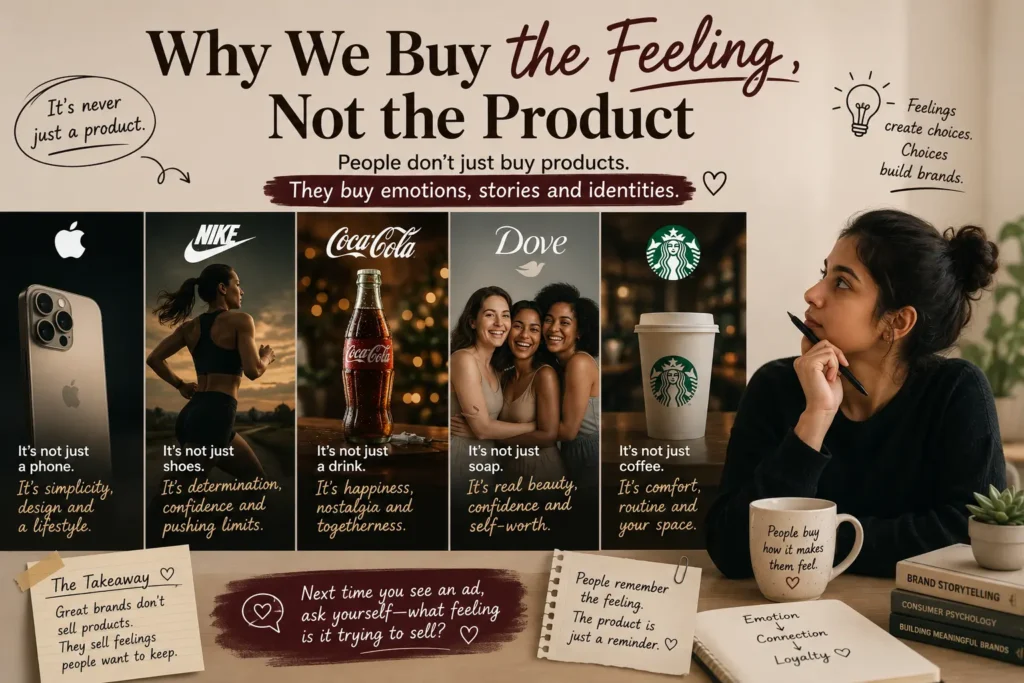
Think about the last time you purchased something you didn’t necessarily need. Perhaps it was a skincare product that promised confidence, a cup of coffee from your favourite café, or a pair of shoes that made you feel more comfortable and stylish.
What influenced your decision?
Was it simply the product itself, or was it the experience, expectation, or emotion associated with it?
We often believe that purchasing decisions are based on price, quality, features, and practical benefits. While these factors certainly matter, emotions also play an important role in shaping what we choose to buy.
Sometimes, people aren’t just purchasing a product. They are purchasing what they believe that product will make them feel.
And this is where the psychology of marketing becomes interesting.
The Difference Between Buying a Product and Buying a Feeling
Imagine two brands selling similar skincare products.
The first brand focuses entirely on its ingredients, packaging, price, and product benefits. The second communicates how its product fits into a customer’s self-care routine, helping them feel comfortable and confident in their own skin.
Both brands may offer products with similar qualities, but their communication creates different impressions.
The first gives customers reasons to consider the product. The second gives them an emotional experience to associate with it.
This doesn’t mean that product quality is unimportant. Instead, it shows that the perceived value of a product can extend beyond its practical purpose.
A notebook might simply provide pages for writing, but for someone who loves journaling, it could represent creativity, organisation, or a fresh beginning.
A running shoe may provide comfort and support, but it might also represent personal achievement, discipline, and the excitement of reaching a fitness goal.
The product remains the same. The meaning attached to it changes.
Why Emotions Influence Purchasing Decisions
Human decisions are not always as rational as we imagine. Our feelings, memories, personal experiences, and expectations can influence how we evaluate different choices.
Consider walking into a bakery.
You might initially notice the smell of freshly baked bread, the welcoming atmosphere, or the way the products are displayed. Before examining the prices or ingredients, you may already have developed a positive impression of the place.
That initial feeling can influence whether you decide to stay, explore the menu, or return another day.
Marketing works in a similar way.
Businesses use colours, images, music, storytelling, packaging, and communication styles to create associations in the minds of consumers.
Over time, these associations can influence how people recognise, remember, and evaluate brands.
This is one reason emotional connections are important in marketing. They can give customers something meaningful to associate with a business beyond its products or services.
When Brands Sell More Than Their Products
One interesting example of emotional branding is Dove’s Real Beauty campaign.
Instead of focusing exclusively on product features, Dove developed campaigns that challenged conventional beauty standards and encouraged conversations around confidence and self-image.
The message extended beyond personal care products. It connected the brand with ideas of authenticity, individuality, and real beauty.
This approach gave audiences something to relate to beyond the products themselves.
It also demonstrates an important marketing principle: a brand’s communication can influence what people associate with it.
Customers may remember a brand not only for what it sells but also for the ideas, experiences, and values it represents.
Of course, emotional branding works best when the message is supported by genuine brand behaviour. A meaningful campaign cannot replace product quality or customer experience.
The Role of Storytelling in Emotional Marketing
Facts can explain what a product does, but stories help people understand why it might matter to them.
Think about how a company introduces a new product.
One approach is to list its specifications, features, and benefits. Another is to show how the product fits into someone’s everyday life.
For example, a travel company could simply advertise holiday packages, destinations, and accommodation prices.
Alternatively, it could tell a story about discovering unfamiliar places, spending quality time with loved ones, and creating memories.
Both approaches communicate the offering, but the second creates a more vivid picture of the experience.
Storytelling allows audiences to imagine themselves in situations they recognise or aspire to experience.
For businesses, this creates an opportunity to communicate value in a way that feels more personal and relatable.
Understanding What Customers Really Want
If businesses want to create meaningful emotional connections, they first need to understand their audiences.
This requires looking beyond basic demographic information and exploring the motivations behind customer behaviour.
Some useful questions include:
- What problems are customers trying to solve?
- What experiences influence their choices?
- What do they value when comparing different brands?
- What concerns might prevent them from making a purchase?
- What kind of experience do they expect from a business?
Businesses can explore these questions through customer interviews, surveys, reviews, social media discussions, and feedback.
Looking at customer behaviour alongside these insights can help marketers understand not just what people purchase, but also why they make particular choices.
This understanding can guide content creation, brand positioning, advertising messages, and customer communication.
Emotional Marketing Should Not Become Manipulation
There is an important distinction between creating an emotional connection and taking advantage of someone’s emotions.
Effective emotional marketing should help customers understand a product’s value and develop a genuine connection with a brand.
It should not rely on misleading promises, unrealistic expectations, or unnecessary pressure.
For example, a brand promoting a wellness product should communicate its benefits responsibly rather than making customers feel insecure about themselves.
Trust takes time to build, but misleading communication can damage it quickly.
Ultimately, emotional marketing should make a brand more meaningful without compromising honesty.
What This Means for Businesses and Marketers
Understanding the emotional side of consumer behaviour can change how businesses approach marketing.
Instead of asking only, “How can we sell this product?”, marketers can begin by asking, “Why would someone care about this product?”
That shift can influence several areas of marketing:
- Branding: Develop an identity that reflects meaningful values and experiences.
- Content marketing: Create content that addresses real customer interests and concerns.
- Social media marketing: Encourage conversations rather than focusing entirely on promotional messages.
- Advertising: Communicate the experience and value behind an offering, not just its features.
- Customer experience: Make every interaction consistent with the expectations created by the brand.
These activities work together to shape how customers experience and remember a business.
Final Thoughts
The next time you purchase something, take a moment to think about what influenced your decision.
Was it the product’s features, its price, a recommendation, or the feeling you associated with it?
Perhaps it was a combination of several things.
Consumers don’t always separate products from the experiences and emotions surrounding them. Sometimes, what makes a brand memorable is not simply what it offers but how it makes people feel.
For marketers, understanding this relationship is an opportunity to communicate more thoughtfully, create more meaningful experiences, and build brands that people genuinely connect with.
Because in a marketplace filled with similar products, the feeling associated with a brand can become one of the things that makes it different.
Frequently Asked Questions About Emotional Marketing
- Why do customers develop emotional connections with certain brands?
Customers may associate brands with personal experiences, memories, values, and aspirations. When a brand consistently reflects something meaningful to them, it can become a familiar and preferred part of their lives.
- What is emotional branding in digital marketing?
Emotional branding focuses on developing relationships with audiences through meaningful communication, storytelling, shared values, and memorable experiences. It helps businesses create an identity that customers can connect with.
- How can businesses understand the emotions behind customer purchases?
Businesses can study customer motivations through surveys, interviews, online reviews, social media conversations, and feedback. These insights help marketers understand the reasons behind purchasing choices.
- Is emotional marketing effective for every type of business?
It can be applied across different industries, but the approach should reflect the audience and the product. A financial service may focus on confidence and security, while a travel business may communicate adventure and discovery.
- How does brand storytelling influence purchasing decisions?
Brand storytelling helps customers understand the purpose and value behind a product or service. Relatable stories can make brand messages easier to understand, remember, and connect with.
- What is the difference between emotional marketing and product-focused marketing?
Product-focused marketing highlights features, specifications, and practical benefits. Emotional marketing communicates the experiences, aspirations, and feelings associated with an offering. Combining both can create a more complete marketing message.
Well-written article! I appreciate the clarity and effort put into this post. Thanks for providing such useful content. Keep it up!
— Muhammad Fayiz | Freelance Digital Marketer
Thank you, Muhammad! I’m glad you enjoyed reading it.